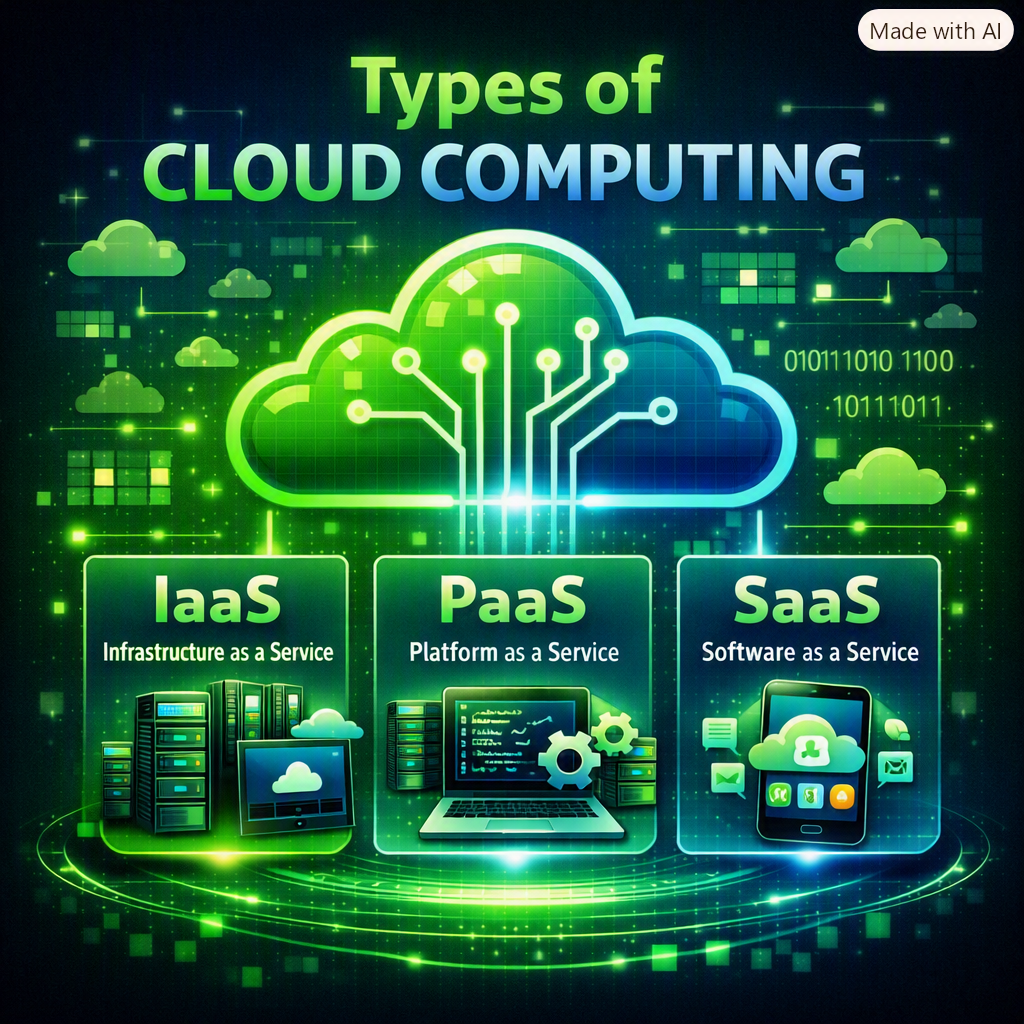
Types of Cloud Computing
Cloud computing isn’t limited to a single model — it’s split into several main types that differ in security, control, and cost. Choosing the right one depends heavily on the nature of your project and your specific needs.
Understanding the differences between these types helps you make the right investment decision from the start, and avoids extra costs or security issues that could result from choosing a model that doesn’t fit your data sensitivity or business size.
Public Cloud
In a public cloud, multiple customers share the same infrastructure provided by the vendor. It’s the most common and economical option, suitable for most standard websites and business applications.
Despite sharing the underlying infrastructure, each customer’s data is logically isolated from other customers’ data through virtualization technology, providing a solid security level suitable for most business use cases.
For More Details Please Contact Us
Private Cloud
A private cloud is a fully dedicated cloud environment for a single customer, offering a higher level of security and control. It’s the preferred option for organizations handling sensitive data or subject to strict compliance requirements.
It’s commonly used by financial, government, and healthcare institutions, since it gives them complete control over where data is stored and how it’s accessed, in line with local data protection regulations.
Hybrid Cloud
Hybrid cloud combines the advantages of both public and private cloud, allowing a company to run sensitive systems on private infrastructure while benefiting from the flexibility and cost savings of public cloud for less sensitive workloads.
This model is ideal for companies going through a gradual digital transformation, letting them move part of their systems to the cloud while keeping critical systems within their own private infrastructure or local data center.
Multi-Cloud
Multi-cloud is a strategy where a company relies on more than one cloud provider at the same time, reducing dependency on a single vendor and ensuring service continuity if one provider experiences an outage.
How to Choose the Right Type for Your Project
- Assess the sensitivity level of the data you’ll be handling
- Determine your budget for the short and long term
- Review legal compliance requirements in your industry
- Consider your project’s growth plans over the next 3-5 years
Frequently Asked Questions (FAQ)