Types of Dedicated Servers
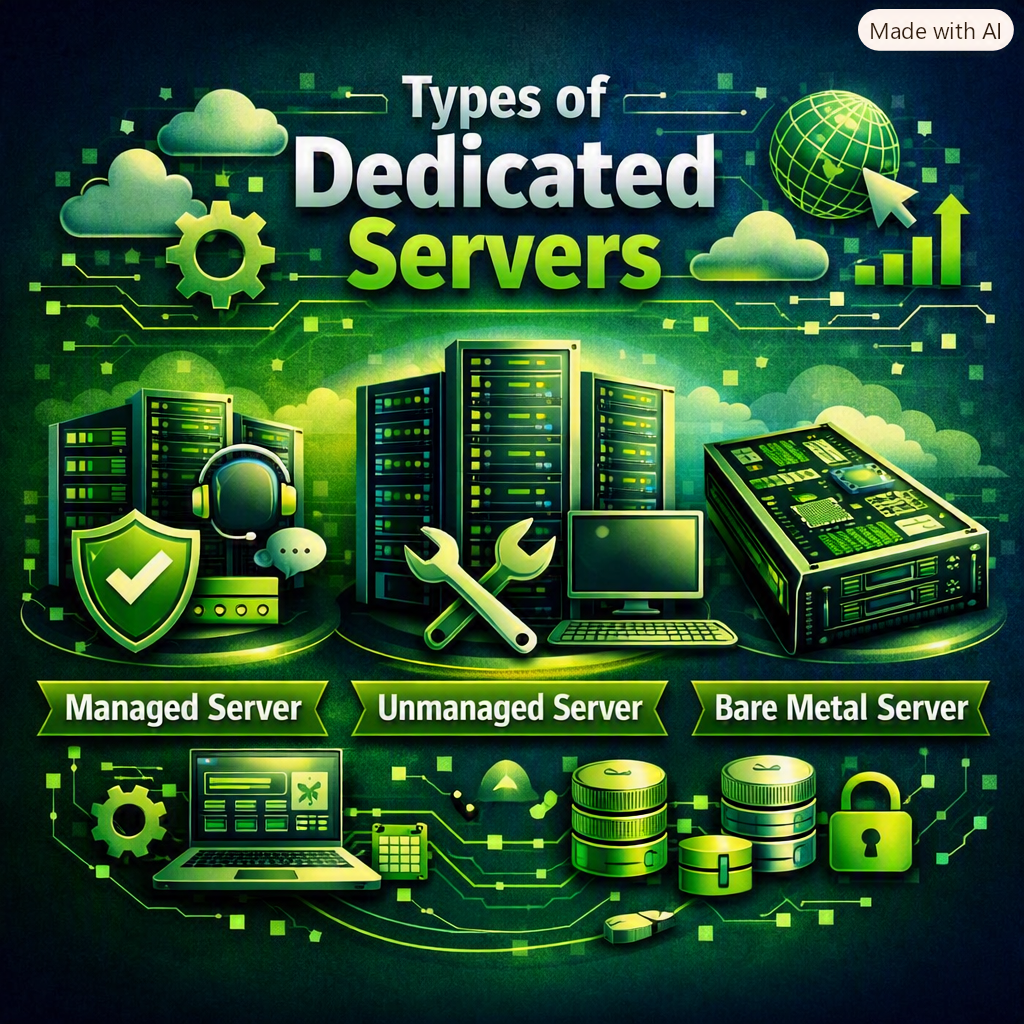
Dedicated servers fall into two main categories based on the level of management: managed servers, where the provider handles all technical tasks, and unmanaged servers, where you take on full responsibility.
Managed Dedicated Server
With a managed server, the provider’s support team handles installation, updates, monitoring, and security — the best option for those without an in-house technical team.
This service typically also includes: automatic backup setup, regular server performance tuning, and round-the-clock technical support for handling any urgent technical issue.
Unmanaged Dedicated Server
An unmanaged server gives you complete control with no intervention from the provider, suitable only for those with high technical expertise or teams with a dedicated systems administrator.
Contact Us For More Details
Other Classifications by Hardware
- Single Processor Server: suitable for medium-sized projects
- Dual Processor Server: for heavy-load projects
- Dedicated GPU Servers: for AI and graphics processing workloads
- Storage-Intensive Servers: for archiving projects and large databases
Additional Criteria When Comparing Plans
When comparing managed server plans, it’s worth looking closely at the Service Level Agreement (SLA), the guaranteed support response time, and whether additional security services like DDoS protection are included in the package or require an extra fee.
Frequently Asked Questions (FAQ)